01 / Commerce / Flagship
The Turnaround
A loss-making 7-figure Amazon channel taken to double-digit net margin, with ad spend cut by more than half.
- Channel P&L
- Loss-makingchanged toDouble-digit net margin
- Blended ACoS
- Around 80%changed toUnder 20%
- Ad spend
- Baselinechanged toCut by more than half
- Revenue concentration
- 70-80% in one SKUchanged toAcross 53 SKUs
Challenge
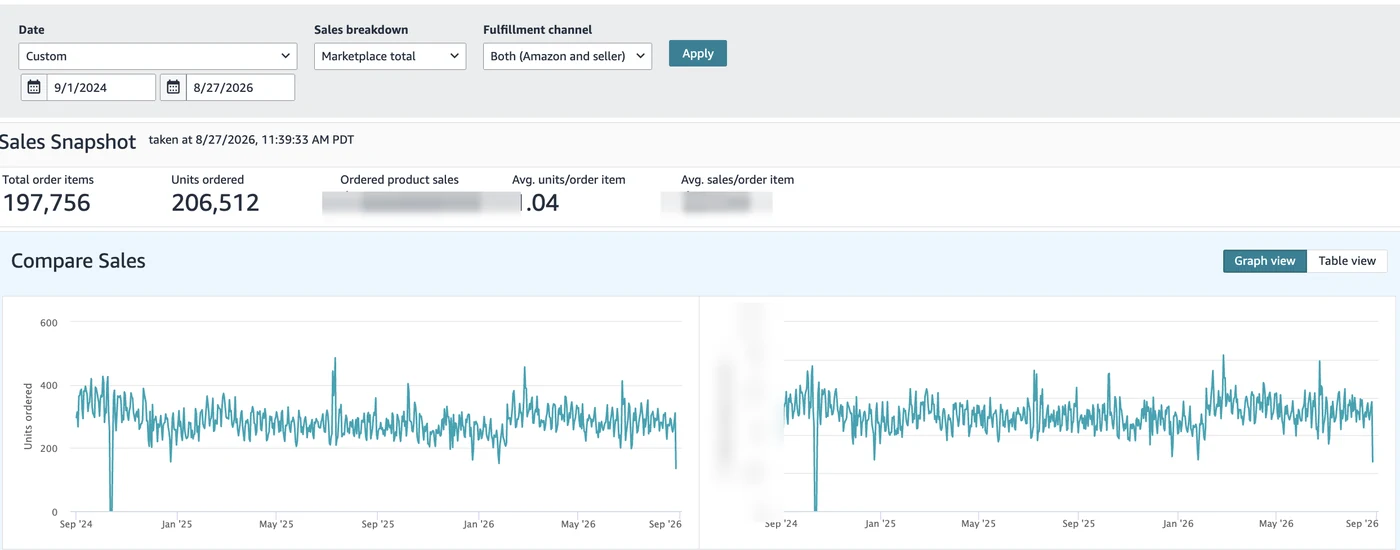
The channel was doing 7-figure revenue and losing money on it. Blended ACoS sat around 80%, so advertising was consuming the margin faster than sales could replace it. Underneath that, 70 to 80% of revenue came from a single SKU. One listing problem, one stock-out, one suppression on that ASIN and the whole channel stopped.
The brief when I took it over was growth. The actual problem was that nobody could say which SKUs made money after ads, fees and freight, so every spending decision was being made on ROAS, which does not care whether you can afford the sale.
Approach
- Rebuilt the campaign structure around contribution margin per SKU rather than a blanket ROAS target. Each product got a spend ceiling it could actually carry.
- Cut placements and match types that were buying volume below cost. Held spend where it defended organic rank on the products that fund the catalog.
- Worked the catalog forward so revenue stopped depending on one listing. That meant getting 53 SKUs into a state where they could be advertised at all: content, images, variation structure, stock.
- Built the inventory forecasting system so reorder timing stopped being a monthly guess, because stock-outs on a hero SKU cost more than any ad decision.
- Traded the events myself. Black Friday and Cyber Monday were run solo on US hours, with pricing held above the annual average rather than discounted into volume that would not repeat.
Result
- The channel went from loss-making to a double-digit net margin.
- Blended ACoS came down from around 80% to under 20%.
- Ad spend was cut by more than half.
- Revenue concentration moved off the 70 to 80% single-SKU dependency and across the 53-SKU catalog.
- The BFCM period traded without discounting below the annual average price, so the margin held through the busiest weeks of the year.