08 / AI / Delivery
Seven-Day SaaS
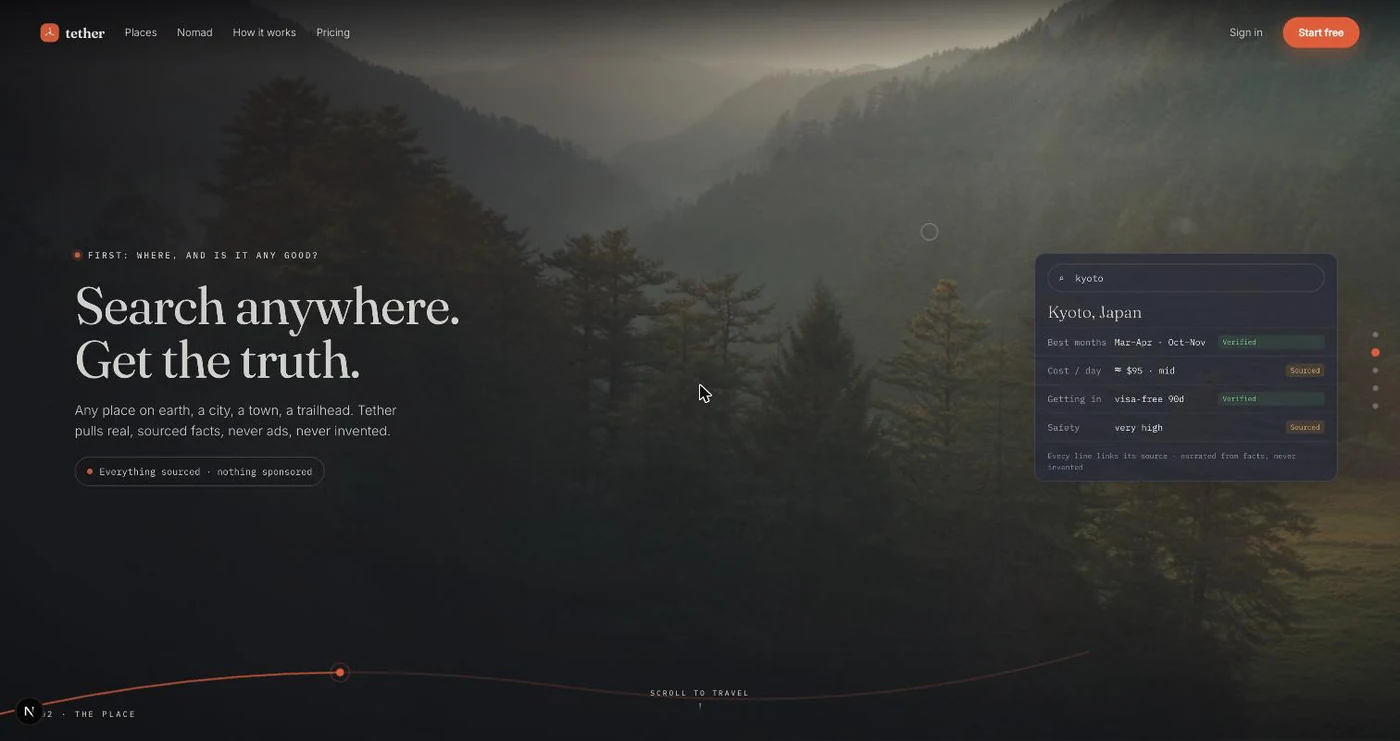
TETHER, a travel-planning product with nothing to do with e-commerce, designed, built and deployed in 7 days across 374 commits.
- Elapsed time
- Empty repochanged toSeven days to live
- Commits
- 0changed to374
- Scope
- A conceptchanged toA live travel product
- Team
- Solochanged toSolo, agents governed
Challenge
Most of my AI work sits inside a commerce operation, which makes it fair to ask whether the AI is doing the work or whether the commerce context is. So I picked a domain with no overlap at all: travel planning. A product I would have to design, build, deploy and be responsible for, in a category where none of my operating knowledge helps.
The constraint was a week.
Approach
- Designed the product first: what it does, what it deliberately does not do, and the smallest version that is still worth using.
- Built it as a real application rather than a demo. Next.js and Prisma, with a data model that assumes people come back to their plans.
- Ran the build through the same governed agent workflow I use at work: staged execution, a verification pass, and no unreviewed code reaching the main branch.
- Deployed it to Vercel and kept it running, which is the part that separates a product from a weekend project.
Result
- Seven days from empty repository to a deployed product, across 374 commits.
- Built solo, with the agent workflow doing the volume and me doing the judgement.
- A live travel-planning product with no commerce logic in it anywhere.
The point of this one is transferability. The delivery speed comes from the method, and the method does not care what the product is about.